Exit 8 Tips Without Spoilers: How to Spot Anomalies in Any Anomaly Game
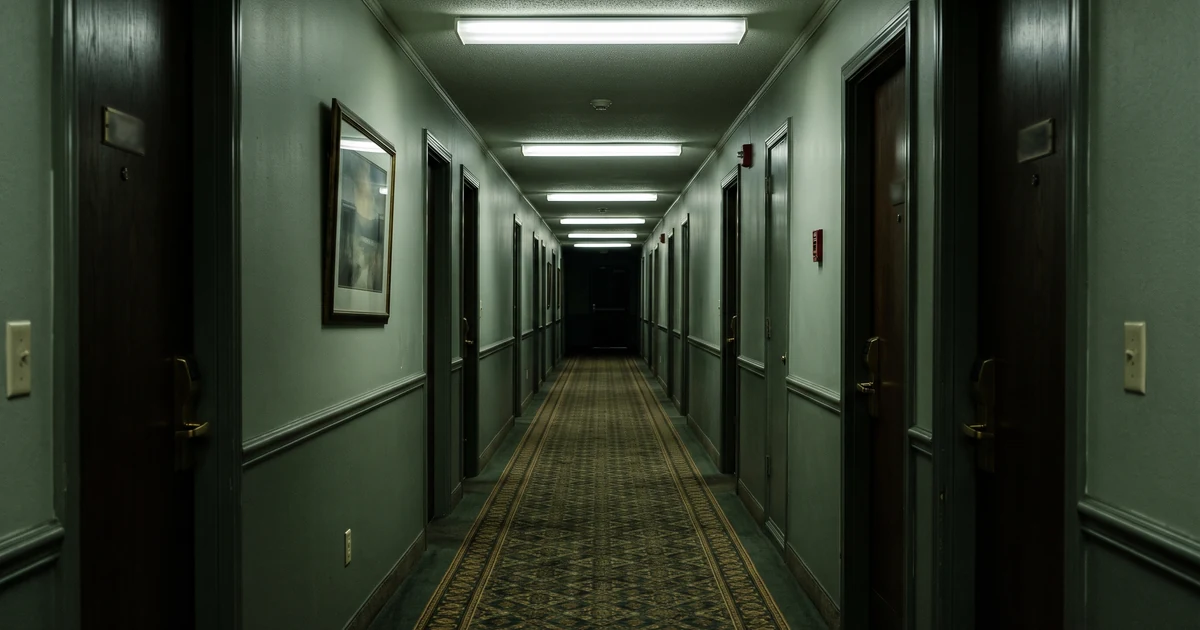
TL;DR: Learn what normal looks like first, then scan the same places in the same order on every pass, and call a change only when you can point at it. These Exit 8 tips name no anomalies and work in any anomaly game.
The best Exit 8 tips with no spoilers are about method, not answers. Learn what normal looks like first, scan the same places in the same order on every pass, and call a change only when you can point at it. That routine fits the original game from developer Kotake Create, and it fits any other anomaly game, because the hard part is rarely a lack of hints. The hard part is that eyes skip over things that changed. This guide names no anomaly from The Exit 8 or from our own game, so you can read it before you play, mid-run or after you get stuck.
We make Mysterious Hotel at Codixus, an anomaly game set on a hotel night shift, so we think about this problem a lot. This guide is about the original game, not a Roblox version or the film.
Why you miss changes you are looking straight at
Missing a change in a scene you are staring at is normal. Psychologists call it change blindness, and Wikipedia describes it as a perceptual phenomenon in which a change in what you are looking at goes unnoticed. In one lab method, the flicker paradigm, a picture and an altered copy of it alternate on screen, separated each time by a blank display.
The same trap waits in any anomaly game. You look away from a spot, you look back, and a difference that arrived in between is easy to miss, because nothing on screen tells you where to look.
One classic real-world demonstration is a 1998 study by Daniel Simons and Daniel Levin. In their paper in Psychonomic Bulletin & Review, an experimenter asked a pedestrian on the Cornell University campus for directions. Two other experimenters carrying a door passed between them, and when the door was gone, a different experimenter was standing there. Only 7 of the 15 pedestrians reported noticing the change, even though the two experimenters differed in clothing, appearance and voice. That was one small experiment, so treat it as a vivid demonstration and not a rule about everyone.
Two details from the research matter for games. First, the Wikipedia page says that "Increasing shifts in attention decrease the severity of change blindness." That line comes from lab work on attention shifts, not from a study of players, so treat it as a loose hint for scanning instead of staring. Second, the page notes that physics experts were more likely than novices to notice a change between two physics problems. It is a physics study, not a corridor study, but we read it as a hint that knowing what matters in a scene helps you see what changed in it.
A scanning routine that works in any anomaly game
This routine carries over because Exit 8-likes share a structure. Wikipedia says that games taking heavy inspiration from The Exit 8 were dubbed "Exit 8-likes", and Sean Colligan at Scrmbl sums up what they share as "a looping stage, differences to spot, and some asset absurdity". A stage that repeats gives you a normal to learn, and differences to spot give you something to compare it with.
Staring at the middle of the screen and waiting for something to pop out is a weak plan. Use a fixed order instead, the same one on every pass:
- Floor. Carpet, tiles, markings, anything at your feet.
- Walls, left to right. Pictures, signs, switches, light fittings, anything hung or mounted.
- Ceiling. Lights, vents, cameras, anything overhead.
- Doors and openings. Which are open, which are closed, and how many there are.
- Objects and furniture. Small things last: whatever sits on a surface or in a corner.
- Far end and edges. The distance, the corners of the frame, anything half hidden.
The exact order matters less than keeping it fixed, so a gap in your scan becomes a gap you can notice. If the game lets you take your time, take it. Try saying the list quietly to yourself: floor, walls, ceiling, doors, objects, far end. It sounds silly, but it makes a skipped step easier to notice.
This is a practical routine, not a scientific protocol, and we are not claiming a study proves it works. It turns the loose idea above, keep your attention moving, into something you can actually do while you play. A step you skip is exactly where a change can hide, so do not skip a step because the last pass looked fine.
Learn the normal first
The Exit 8 states its rules on its official Playism page. They are short: "Don't overlook any anomalies." "If you find anomalies, turn back immediately." "If you don't find anomalies, do not turn back." Read those again and notice what they ask for. Every pass is a comparison, and a comparison needs something to compare against. If you do not know the normal, you cannot see the exception.
So make your first pass a memorizing pass. Do not hunt. Go through your scan order and say what is there in plain words, for example a lamp on the left, a mirror by the door, a plant at the end. Short, boring descriptions are the goal.
Then pick three anchors: fixed points you will inspect carefully every time, such as the start, the middle and the end of the space. Anchors give you a place to be sure, and being sure of three spots is easier than being unsure of thirty. They also tell you where you are in the loop.
A photographic memory is not required. A stable picture of the layout, a handful of landmarks and a routine that checks the details for you is enough. If something nags at you but you cannot say what, that is a sign to run the scan again, not to guess.
Seven kinds of changes to expect
A good scan also asks the right question. Instead of "is anything wrong?", ask what kind of difference you are looking for. These are the seven families we built our own game around: moved, rotated, missing, extra, looping, presence and shadow. We find them a useful checklist in any anomaly game. They describe kinds of change, not specific anomalies in any game.
- Moved. Something is in a different place. Check it against your landmarks.
- Rotated. Something sits at a different angle. Straight lines and symmetrical objects give it away.
- Missing. Something that belonged there is gone. These are easy to overlook because there is nothing left to look at, so lean on your memorizing pass.
- Extra. Something is there that was not there before. Count objects in each group and scan surfaces, corners and gaps.
- Looping. Something moves, flickers or sounds in a cycle that should not be there. Give each spot a few seconds of watching and listening before you call it clear.
- Presence. Something suggests that someone is there who should not be. Check the edges and the gaps before the middle.
- Shadow. A shadow or a reflection does not match the room. Ask what could be casting each shadow and what each reflection should show, not only what the objects are doing.
After your normal scan, run the seven questions as a second pass. It costs a little time and gives the second pass a purpose, which is better than looking harder at nothing in particular.
When to call it and when to walk on
The rules quoted above cut both ways: turn back when you find an anomaly, and do not turn back when you do not. That makes two ways to be wrong: missing a change, and turning back when nothing changed. A good routine protects you from both.
Call a change only when you can say what it is and where it is. "Something feels off" is a reason to look again, not a reason to act. Treat doubt as information. If one spot nags at you, go back to that anchor and compare it with your memorized description before you decide.
Do not let atmosphere make the call. A spooky mood can make ordinary things look suspicious, and a flickering light or a quiet room can convince you something changed when nothing did. Ask the plain question: what exactly is different? If you can name it, act. If you cannot, walk on. If tension is what throws you off, our guide to whether The Exit 8 has jump scares looks at how scary anomaly games get and what helps if you startle.
After a wrong call, do not chase it. Go back to the start of your routine, floor first, and run it clean. Chasing a mistake is how the next one happens. A slow, boring pass beats a fast, exciting guess, and the whole point of the routine is to make the decision dull.
Practice on a night shift
If you want somewhere to try all of this on a phone, Mysterious Hotel is our own game from Codixus. It has no connection to The Exit 8, its developer or its publisher.
You work a hotel night shift across five areas: the reception, the corridor and rooms 101, 102 and 103. There are 8 nights and 36 anomalies, spread over the seven kinds of change above, and a casebook for your findings. It plays in landscape on iPhone, iPad and Android, offline, in English and Turkish, with adjustable text size. The home page explains how a shift works.
It is made for players 13 and over, and a Reduced scares setting softens the startling moments. With Reduced scares switched on, it is a gentler place to practice the habit that matters most here: learn the normal, then look for the change. The store listing on your device shows which nights are free in your version. If you want more games in this style, our list of anomaly games for your phone covers the ones we could confirm on iPhone and Android.
One caveat. We do not claim that playing an anomaly game improves your attention in daily life. The nearest research we can point to covers brain-training programs, not anomaly games. A news release from the Association for Psychological Science quotes Daniel Simons, who led the analyses. His words: "we found little evidence for broad transfer from brain-training tasks to other tasks." An anomaly game is not a brain-training program, and we make no such claim. Play it because spotting one wrong detail in a quiet hotel is satisfying and a little tense.
FAQ
Do you need to memorize the whole corridor?
No. You need a steady picture of the layout and the big shapes, plus a scan routine that checks the details on each pass. Treat the first pass as a memorizing pass and let the routine do the rest. If a detail is unclear, look at it again instead of guessing.
Is there a trick to spotting anomalies faster?
Not a trick, but a habit. Scan in the same order on every pass, big shapes first and small objects second. A steady routine usually beats rushing, because rushing is when you skip the spots you meant to check.
Are anomaly games scary?
It depends on the game. Read the store description and the age rating before you play. Mysterious Hotel is made for players 13 and over, and its Reduced scares setting softens the startling moments.
Can I play anomaly games on my phone?
Yes. The Exit 8 lists iOS and Android among its platforms on its official page, and Mysterious Hotel runs on iPhone, iPad and Android. Check each store listing for the current version and details.
Does playing improve attention?
We make no such claim. The research we cite here is about why people miss changes, not about whether a game improves attention, and a 2016 review of brain-training research found little evidence of broad benefits beyond the trained tasks. Play for the puzzle and the atmosphere.
Sources
- Wikipedia (en.wikipedia.org)
- their paper in Psychonomic Bulletin & Review (gwern.net)
- Wikipedia (en.wikipedia.org)
- Scrmbl (scrmbl.com)
- official Playism page (playism.com)
- news release from the Association for Psychological Science (www.psychologicalscience.org)